
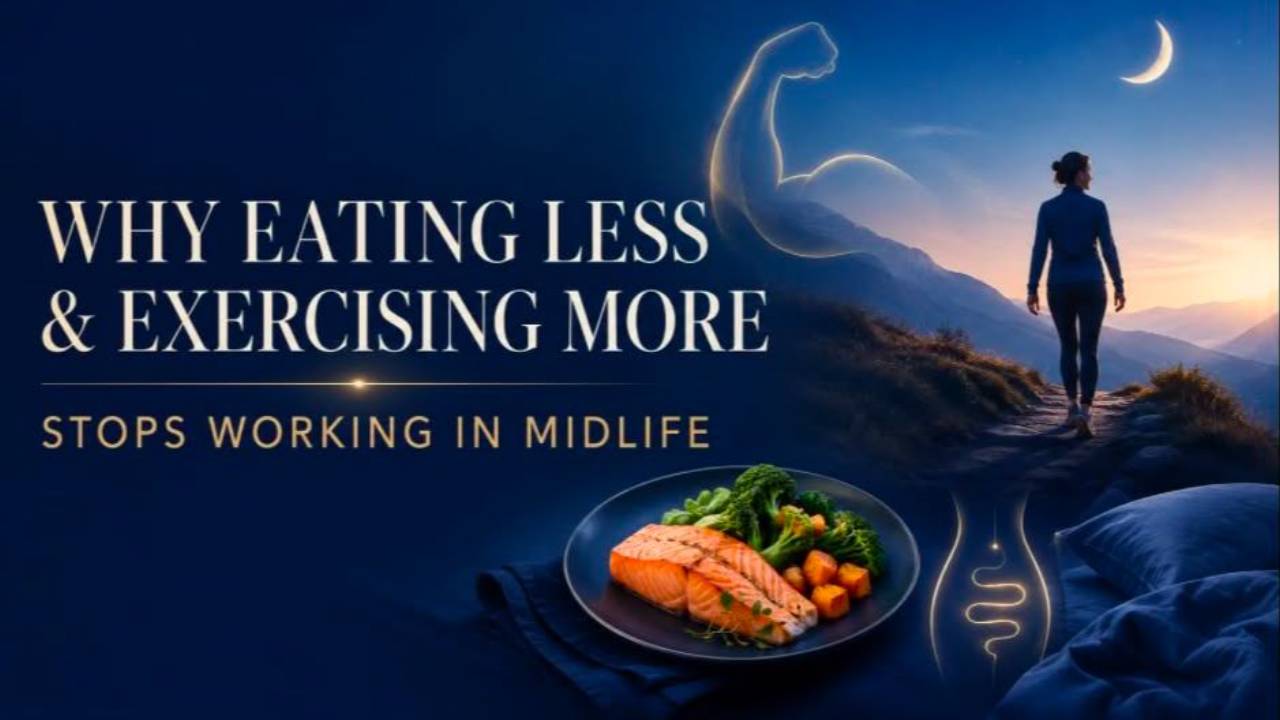
Have you ever felt like you are doing everything “right”?
You are eating less.
You are exercising more.
You may even be skipping meals, cutting carbs, doing extra cardio, and trying your hardest to stay disciplined.
Yet the scale barely moves. Your belly feels more stubborn than ever. You are tired, hungry, craving sugar, waking at night, and wondering what is wrong with you.
Let me say this clearly:
There is nothing wrong with you.
Your body may simply need a different kind of support.
For many women in perimenopause and menopause, the old advice to “eat less and move more” is not only incomplete—it can become frustrating and, at times, counterproductive.
Your Body Is Not a Calculator
Weight and metabolism are not simply about calories in and calories out.
Yes, food and movement matter. But so do your hormones, blood sugar, sleep, stress level, muscle mass, inflammation, digestion, and the health of your microbiome.
As estrogen changes through midlife, many women notice changes in where they store fat, how they respond to carbohydrates, their sleep, energy, mood, and appetite.
This does not mean that you have failed.
It means your body is changing—and your strategy may need to change with it.
Restriction Can Create More Stress
When you are already under stress, eating too little and pushing yourself through exhausting workouts can send your body another message:
We are not safe. We do not have enough.
Chronic stress can affect cortisol, sleep, appetite, cravings, and blood-sugar regulation.
That is why so many women tell me:
“I am barely eating, but I cannot lose weight.”
Or:
“I am good all day, then I cannot stop myself from eating at night.”
This is not a lack of willpower.
It is often a sign that the body needs more nourishment, steadier blood sugar, better recovery, and less pressure.
Muscle Is a Metabolic Asset
One of the most important shifts we can make in midlife is moving away from the idea that exercise is only about burning calories.
Muscle is metabolically active tissue.
It supports strength, mobility, healthy aging, and glucose regulation.
As we age, preserving and building muscle becomes increasingly important.
That is why endless cardio and under-eating are not always the answer.
Instead, think about incorporating movement that helps you become stronger—not just smaller.
Walking is wonderful. Movement is medicine.
But strength-based exercise, appropriate for your body and ability, can be a powerful part of supporting metabolism in this season of life.
Protein Is Not Just a “Fitness Nutrient”
Many women are simply not eating enough protein.
Protein helps provide the building blocks your body needs for muscle, immune function, repair, and healthy blood-sugar balance.
It can also help you feel more satisfied after meals.
Instead of saving most of your protein for dinner, begin asking:
“Did I include a quality source of protein at this meal?”
Eggs, fish, chicken, turkey, Greek yogurt or cottage cheese if tolerated, tofu, tempeh, legumes, and a clean protein shake can all be helpful options.
You do not need perfection.
You need consistency.
Do Not Forget the Gut
Your gut health can influence far more than digestion.
The gut microbiome is involved in inflammation, metabolism, immune signaling, and how the body processes nutrients.
When the gut is irritated or inflamed, when digestion is poor, or when the microbiome is imbalanced, it may be harder for the body to feel and function its best.
This is one reason I do not look at stubborn weight gain as a simple “eat less” problem.
I ask deeper questions:
-
Is blood sugar stable?
-
Is cortisol elevated or is sleep disrupted?
-
Are hormones shifting?
-
Is the body losing muscle?
-
Is digestion working well?
-
Is inflammation present?
-
Is the microbiome being supported?
Because when we understand the root patterns, we can create a plan that works with the body rather than against it.
What to Focus on Instead
Rather than more restriction, consider beginning here:
-
Eat enough nourishing food—especially protein.
-
Build meals that support steadier blood sugar.
-
Include strength-building movement alongside walking and activities you enjoy.
-
Prioritize sleep and nervous-system regulation.
-
Stop treating your body like a problem to punish.
-
Look beneath the symptoms for the metabolic, hormonal, and gut patterns that need support.
Midlife is not the end of feeling strong, energized, and at home in your body.
It may simply be an invitation to stop fighting your body—and start listening to it.
If you are doing all the “right” things and still feel stuck, it may be time to look deeper.
Your body is not broken.
It is communicating.