
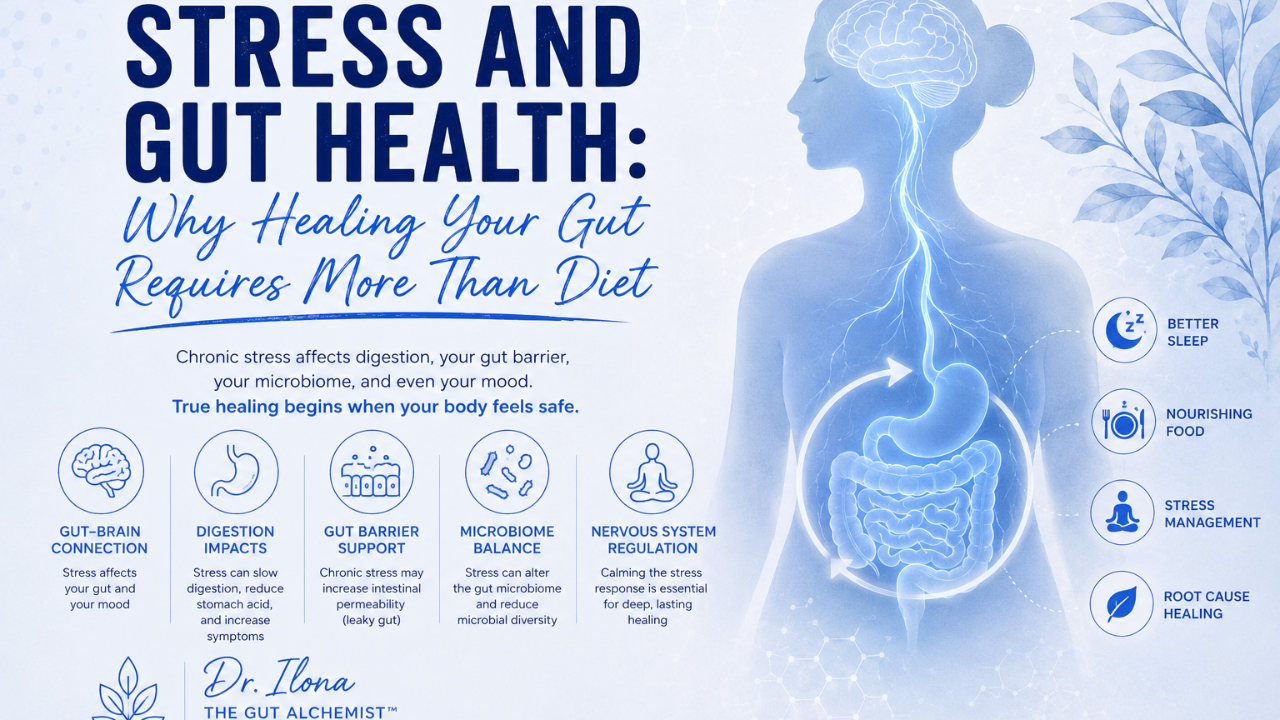
Have you ever noticed that your digestive symptoms seem to worsen during periods of stress?
Perhaps your bloating becomes more pronounced before an important meeting. Your acid reflux flares during a busy week at work. Or your IBS symptoms seem to have a mind of their own whenever life feels overwhelming.
If this sounds familiar, you're not imagining it.
Stress doesn't just affect your thoughts or emotions—it has profound effects on your digestive system. In fact, chronic stress is one of the most overlooked factors preventing people from achieving optimal gut health.
As a Functional Medicine Practitioner, I often remind my clients that healing the gut isn't just about eliminating foods or taking supplements. It's about understanding the many factors influencing digestive health, and one of the most important is stress.
What Is Stress?
When most people hear the word "stress," they think of emotional pressure—deadlines, finances, or relationship challenges.
But from your body's perspective, stress is much broader.
Stress is anything that forces your body to adapt.
It can include:
- Emotional stress
- Poor sleep
- Chronic infections
- Blood sugar imbalances
- Nutrient deficiencies
- Food sensitivities
- Chronic inflammation
- Mold exposure
- Overexercising
- Surgery or injury
Your body responds to all of these by activating the same stress response.
While this response is lifesaving during emergencies, it becomes problematic when it stays activated for weeks, months, or even years.
Your Body Was Designed to Survive First
When you're under stress, your nervous system shifts into what's commonly known as fight-or-flight mode.
This response is controlled by the sympathetic nervous system and is designed to help you survive danger.
During this time:
- Heart rate increases.
- Blood pressure rises.
- Blood flow is redirected to your muscles.
- Stress hormones such as cortisol and adrenaline increase.
Notice what's missing from that list?
Digestion.
Your body temporarily places digestion on hold because surviving the perceived threat becomes the priority.
While this is beneficial during short-term stress, chronic activation can significantly affect digestive health.
How Stress Affects Digestion
One of the first systems to be affected by chronic stress is digestion.
Many people assume they have too much stomach acid because they experience heartburn or reflux. However, chronic stress may actually reduce stomach acid production in some individuals.
Low stomach acid can contribute to:
- Poor protein digestion
- Bloating
- Gas
- Acid reflux
- Nutrient deficiencies
- Increased susceptibility to bacterial overgrowth
Stress may also decrease digestive enzyme production, impair bile flow needed for fat digestion, and alter gut motility, contributing to constipation, diarrhea, or both.
Simply put, the digestive system doesn't function optimally when the body believes it's under constant threat.
Stress and the Gut Barrier
Your intestinal lining serves as one of the body's most important protective barriers.
Although it is only one cell thick, it carefully regulates what enters the bloodstream and what stays inside the digestive tract.
Research suggests that chronic stress can influence this barrier by affecting proteins known as tight junctions.
When these tight junctions become less effective, intestinal permeability may increase—a condition often referred to as "leaky gut."
As a result, food particles, bacterial components, and toxins may cross the intestinal barrier more easily, contributing to immune activation and inflammation.
Stress Changes Your Microbiome
Your gut contains trillions of microorganisms that help digest food, produce vitamins, support immune function, and communicate with your brain.
This community is known as the gut microbiome.
Studies suggest that chronic stress can reduce microbial diversity and alter the balance of beneficial bacteria.
These changes may influence:
- Digestion
- Immune health
- Inflammation
- Mood
- Energy levels
- Brain function
Since many gut bacteria produce or influence neurotransmitters such as serotonin and GABA, an unhealthy microbiome can also affect emotional well-being.
The Gut-Brain Axis: A Two-Way Conversation
The gut and brain are constantly communicating.
This communication occurs through the vagus nerve, hormones, immune signaling molecules, and metabolites produced by the microbiome.
This means:
- A stressed brain can disrupt gut function.
- An unhealthy gut can influence mood, anxiety, focus, and resilience to stress.
This two-way communication explains why digestive symptoms often worsen during stressful periods and why people with chronic digestive disorders frequently experience anxiety or brain fog.
Neither system exists in isolation.
Healing Requires More Than Supplements
Nutrition is important.
Functional testing is valuable.
Targeted supplementation can be incredibly helpful.
But true healing also requires creating an environment where the body feels safe enough to repair itself.
This may include:
- Prioritizing quality sleep
- Stabilizing blood sugar
- Eating adequate protein
- Spending time in nature
- Practicing deep breathing or meditation
- Engaging in regular movement
- Building healthy daily routines
- Identifying and addressing underlying root causes through functional medicine
Healing isn't simply about removing symptoms.
It's about restoring balance.
My Approach to Gut Health
As The Gut Alchemist™, I believe every symptom tells a story.
Rather than asking,
"What supplement should I take?"
I encourage people to ask a different question:
"What is my body trying to tell me?"
When we understand the root causes behind digestive symptoms—including chronic stress—we can create a personalized plan that supports not only the gut, but the whole person.
Because healing isn't just about digestion.
It's about helping the body return to a place where it can do what it was designed to do.
Heal.
Final Thoughts
If you've been doing everything "right" but still struggle with digestive symptoms, don't overlook the role stress may be playing.
Supporting your nervous system isn't separate from healing your gut—it is an essential part of the process.
When we nourish the body, calm the nervous system, and address the underlying causes, we create the conditions where lasting healing can begin.
Your body is not working against you.
It's communicating with you.
The question is: Are we listening?
About the Author
Dr. Ilona – The Gut Alchemist™ is a Functional Medicine Practitioner dedicated to helping people uncover the root causes of digestive symptoms through advanced testing, personalized protocols, and a whole-body approach that addresses the connection between the gut, the immune system, the nervous system, and overall health.