When women enter perimenopause or menopause, the conversation almost always focuses on hormones.
- Hot flashes.
- Night sweats.
- Mood swings.
- Weight gain.
But what if one of the biggest missing pieces isn't your hormones alone?
What if it's your bile?
It may sound surprising, but bile is one of the most overlooked players in digestive and metabolic health—and it can become even more important during midlife.
Bile Is More Than a Digestive Fluid
Most people think bile exists simply to digest fat.
While that's certainly one of its primary jobs, bile also functions as a powerful signaling system throughout the body.
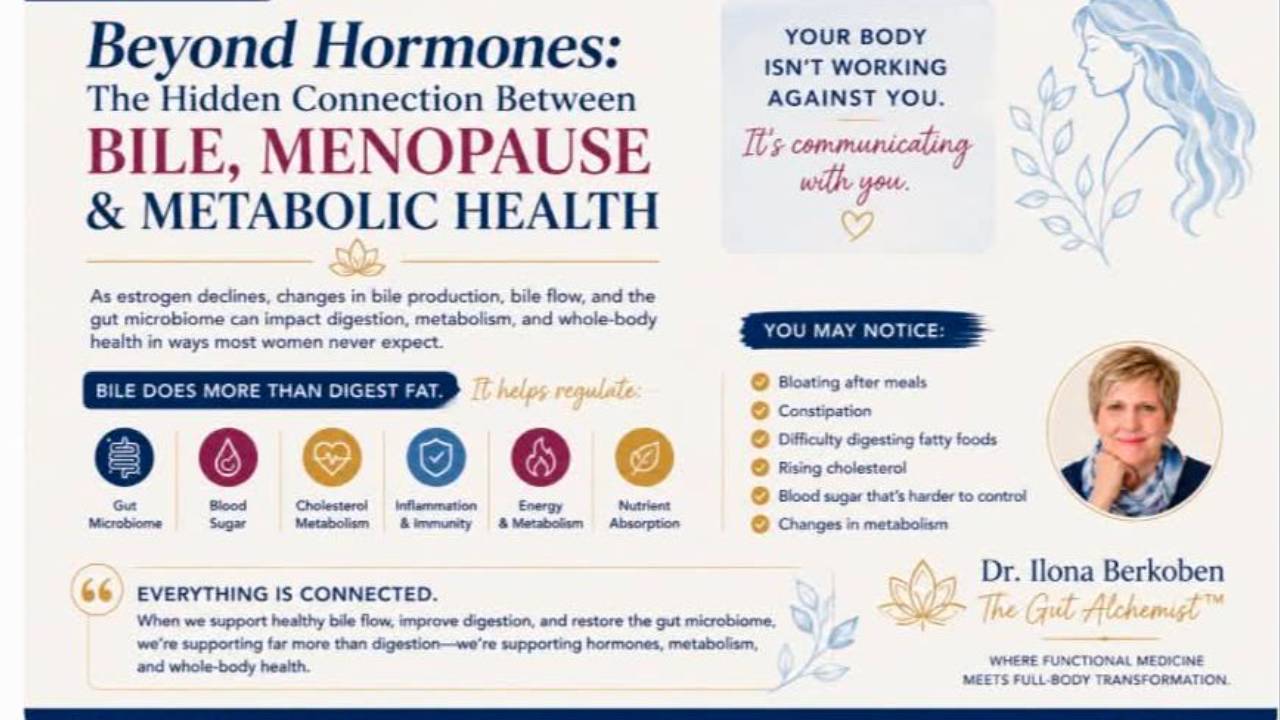
Healthy bile acids help regulate:
- Fat digestion and nutrient absorption
- Cholesterol metabolism
- Blood sugar regulation
- The gut microbiome
- Intestinal barrier integrity
- Inflammation
- Energy metabolism
In other words...
Bile doesn't just help you digest your dinner—it helps regulate your metabolism.
What Happens During Perimenopause and Menopause?
As estrogen levels begin to decline, several important changes occur.
Research suggests that estrogen influences bile acid production, bile flow, and liver function. At the same time, menopause is associated with changes in the gut microbiome.
These changes may contribute to:
- Slower bile flow
- Less efficient fat digestion
- Altered bile acid composition
- Changes in microbial diversity
- Increased inflammation
- Reduced metabolic flexibility
This may help explain why many women notice symptoms that seem completely unrelated.
Common Symptoms You Might Notice
You may experience:
- Bloating after meals
- Constipation
- Difficulty digesting fatty foods
- Rising cholesterol
- Blood sugar becoming harder to control
- Weight gain around the abdomen
- Lower energy after eating
Many women assume these are simply "normal aging."
I don't.
I see them as clues.
The Gut Microbiome and Bile Work Together
One of the most fascinating discoveries in recent years is the close relationship between bile acids and the gut microbiome.
Your liver produces primary bile acids.
Once they reach the intestines, beneficial gut bacteria convert them into secondary bile acids.
These secondary bile acids aren't waste products—they're active signaling molecules that communicate with receptors throughout the body, including FXR and TGR5.
When these receptors are activated appropriately, they help regulate:
- Blood sugar
- Insulin sensitivity
- Energy expenditure
- Cholesterol metabolism
- Inflammatory responses
- Gut barrier function
This means your microbiome doesn't just digest food—it helps shape how your metabolism functions.
Why This Matters for Metabolic Health
When bile flow becomes sluggish or the microbiome becomes imbalanced, the effects extend far beyond digestion.
You may begin to see:
- Increased insulin resistance
- Higher cholesterol
- Greater inflammation
- Reduced metabolic flexibility
- Poor absorption of vitamins A, D, E, and K
This is one reason I rarely look at digestive symptoms in isolation.
Everything is connected.
Supporting Healthy Bile Flow Naturally
While every person is unique, supporting healthy bile flow often includes:
- Eating enough healthy fats to stimulate bile release
- Prioritizing adequate protein
- Including colorful, fiber-rich vegetables to nourish the microbiome
- Staying well hydrated
- Moving your body regularly
- Supporting liver health
- Addressing gut dysbiosis when present
- Managing chronic stress, which can negatively affect digestion
For individuals who have had their gallbladder removed or who struggle with significant digestive symptoms, a personalized approach may also include targeted nutritional support and functional testing.
The Functional Medicine Perspective
Functional medicine asks a different question.
Instead of asking:
"How do we treat the symptom?"
We ask:
"Why is this happening?"
When we support healthy bile production, restore microbial balance, improve digestion, and reduce inflammation, we aren't simply helping the gut.
We're supporting hormones.
We're supporting metabolism.
We're supporting long-term health.
The Bottom Line
If you've entered perimenopause or menopause and suddenly feel like your body has changed overnight, know this:
It isn't "all in your head."
And it isn't always "just your hormones."
Sometimes the missing piece is a system that few people are talking about.
Your bile.
When we connect the dots between hormones, digestion, the microbiome, and metabolism, the picture becomes much clearer—and so does the path toward healing.
To Your Radiant Health, and Thriving Gut,
Dr. Ilona
The Gut Alchemist™
Where functional medicine meets full-body transformation.
Ready to Connect the Dots?
If you're struggling with digestive symptoms, rising cholesterol, stubborn weight gain, or blood sugar changes during perimenopause or menopause, you don't have to navigate it alone.
A personalized functional medicine approach can help uncover the root causes and create a plan tailored specifically to your body.
Because healing begins when we stop treating symptoms separately—and start understanding how everything is connected.