
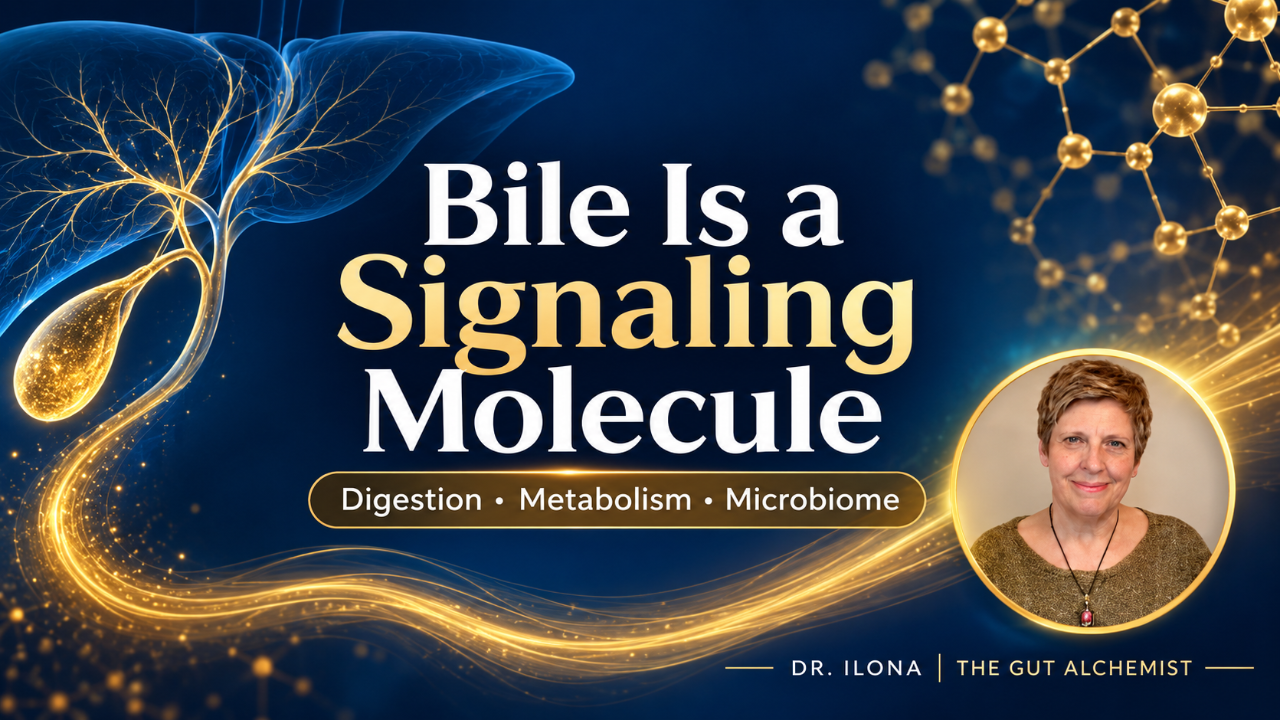
When most people think about bile, they think about the gallbladder and fat digestion.
And yes—bile is essential for helping us digest and absorb dietary fats, as well as fat-soluble vitamins such as A, D, E, and K.
But bile is much more than a digestive fluid.
Bile acids are also signaling molecules.
That means they communicate with receptors throughout the body, helping influence how we manage blood sugar, cholesterol, inflammation, energy use, and even the gut microbiome.
The Conversation Between Bile and Metabolism
Bile is made in the liver from cholesterol, stored and concentrated in the gallbladder, and released into the small intestine when we eat—especially when a meal contains fat.
Once bile acids enter the intestine, they do not simply help break down fats. They also activate important receptors, including FXR and TGR5.
Think of these receptors as messengers. When bile acids activate them, they help send signals related to:
- Glucose and insulin regulation
- Lipid and cholesterol metabolism
- Energy expenditure
- Inflammatory signaling
- Gut-barrier integrity
- The makeup and activity of the gut microbiome
This is one reason the gallbladder, liver, gut, and metabolic health are so deeply connected.
Bile and Blood-Sugar Balance
Healthy bile-acid signaling is involved in the body’s metabolic response to a meal.
In the intestine, bile-acid signaling can influence hormones such as GLP-1, which plays a role in insulin release, blood-sugar regulation, appetite, and satiety.
This does not mean that bile is a magic answer for blood sugar or weight loss.
But it does mean that when we look at insulin resistance, cravings, stubborn weight, fatty liver, high triglycerides, or metabolic dysfunction, we should not ignore the digestive and biliary system.
Bile and the Gut Microbiome
The relationship between bile and the microbiome goes both ways.
Bile acids help shape which microbes thrive in the gut.
At the same time, gut bacteria transform bile acids into different forms—changing the signals they send throughout the body.
When the microbiome is disrupted by factors such as antibiotics, chronic stress, low dietary diversity, infections, or inflammation, bile-acid metabolism may be affected too.
This is one more example of what I call:
One root, many expressions.
A person may experience bloating, poor fat tolerance, constipation or loose stools, abnormal cholesterol, blood-sugar dysregulation, inflammation, or weight resistance.
These may look like separate problems—but sometimes they are part of a larger conversation involving the gut, liver, gallbladder, microbiome, and metabolism.
Why Symptoms Deserve a Closer Look
Symptoms such as nausea after meals, bloating after fats, digestive discomfort, changes in bowel movements, or difficulty tolerating healthy fats are not enough to diagnose a gallbladder or bile-flow issue.
But they are clues.
They tell us it may be time to stop guessing and look at the full picture: symptoms, food patterns, medical history, medications, labs, gut health, liver health, and metabolic markers.
The goal is not to put everyone on the same “bile support” protocol.
The goal is to understand what is happening in your body and choose the right next step.
Because bile is not a side character in health.
It is part of the metabolic conversation.